Thursday, November 19, 2009

Facing Open Ocean Alone, Part 3

BY ADRIAN JOHNSON

November 2nd. Third day at sea. The clouds are lighter, but it's a gloomy and showery morning. The excitement of being on the ocean is gone. I'm wet and cold, tired and bruised, and really want to turn the boat around and head home.

I've been calculating a new turnpoint that's less upwind of my current position, but still meets the 100NM requirement. I tack on a shift and my boat is pointing straight at the waypoint with only a couple miles to go. I hear a splash in the water. Half a dozen dolphins are playing around my boat. They’re a species I’ve never seen before.

I do a quick position check and find I am 101NM from Amphitrite Point. Finally, time to turn around! I bear off onto a broad reach, with the swells right off the stern. The dolphins have followed me through the turn and keep playing with the boat for a couple miles before disappearing. Unfortunately, the wind has died down and I can't quite get the boat to surf. I think about putting up the genoa to eek out a little more speed, but I'm just too tired. I make some oatmeal instead.

The sun has come out, it's getting warm and I start shedding layers and laying clothes out to dry in the cockpit. Reaching in the sun is so much more pleasant than beating in the rain, I feel like I could do this for weeks!
Click to see a video Adrian took during this point in his trip!

The dolphins are back, splashing around the boat. I ignore them until I hear an unusually loud blow. I turn around to see a ten foot spray plume hanging in the air about two boat lengths off the stern, and a whale breaks the surface and disappears. I'm a little nervous about having a creature the size of my boat this close! I almost ran it over! The dolphins are bow-riding the whale the way they've been playing with the boat. A little further, off to port another whale surfaces with its own pod of dolphins. Soon our paths diverge and they disappear in the swells.

I pull out my $15 plastic sextant and take a sun sight, then slip out of my foulies, pull out my sleeping bag, and put my timer on 30 minutes for my first real sleep in two days. It's hard to let go of the anxiety, but when the timer goes off I feel like I've had a bit of rest. I do a quick check of the sails and horizon and restart the timer. I do this a couple more times before deciding I've had enough sleep. I make lunch, then take another sun sight and run the calculation. It looks reasonable, but I don't have a sheet to plot my position, and I'm off the chart, so I'll have to wait til I get home to see how accurate it was (8 miles off).

The wind is lightening up, the swells are dying, and my ETA at Flattery is slowly creeping towards tomorrow morning. About 60 miles out I'm starting to receive the VHF weather. Sounds like I'm going to be facing a decent breeze at the entrance, and variable winds in the Strait. In the late afternoon I put put my damp clothes back on so my body heat will dry them out fully.

I take quick sights of the moon and Sirius between the clouds. The horizon is easily visible in the full moon, but I have trouble reading the sextant in the dark and my position comes out a couple thousand miles off. I'll have to be more careful. The wind is now NNW and I've had to sheet in quite a bit. If I'd known I would've aimed further west instead of sticking to the rhumb line. The weather forecast is now 15-25 knot easterlies in the west part of the Strait in the morning, variable 15kts in the rest. I hope I can get there early enough to cut through the easterlies before the chop builds up.

Wednesday, November 18, 2009

Facing Open Ocean Alone, Part 2


BY ADRIAN JOHNSON

On Halloween day I take my time getting ready. Showers are rolling through and the winds are light. I motor to Wilson Point, hoist sails, secure the engine, reset my trip logs and start beating in a light westerly. The wind eventually picks up to 15 kts or so and, just as I am hoisting the #4, jumps into the twenties. The chop isn't excessive, though, and after a couple hours of beating I'm abeam Port Angeles, where the wind eases a bit. It's a long way to Cape Flattery, but I'm well rested and happy to be sailing in waters I don't get to see much.

The sun goes down and it's a clear but chilly night with a full moon. I'll occasionally set my timer and grab a quick nap down below, sometimes 10, sometimes 20 minutes. I don't really fall asleep but it feels good to get out of the cold, close my eyes and rest. I have a thought for the Halloween party back home, but it's a good to be here. At 03:00 on November 1st I change my clock to Standard Time and live that hour again. In the early morning the winds become light, and I'm starting to feel the swells from the ocean.


The setting moon has been outlining a dark shape ahead that is keeping me from napping. Looking at my chart it seems like it could be Tatoosh Island, 10 or 15 miles ahead, but that should be hidden from view by the Cape. As the dawn breaks I realize my island is actually a tree floating about a hundred yards in front of me. It's a 60 or 70 foot pine, with roots and branches and couple birds are perched on it, bobbing in the swells, slowly floating out to sea.

The tree and I drift past Neah Bay at dawn and eventually the wind turns to a light easterly. It takes me almost all morning to get past Cape Flattery. With the light wind and 12 ft swells the boom is swinging over my head, so I rig a preventer and try to keep my mind off the flogging sails. In the early afternoon the Cape is starting to fade in the mist and the ride is smoother, with the wind off the beam. I hoist the genoa and go about my daily activities of, well, mostly eating. Singlehanding keeps me pretty busy.


By mid afternoon I'm getting sleepy, and starting to hear voices on the boat, which I've heard is pretty typical for solo ocean sailors. The lapping of the water against the hull is like a quiet conversation between familiar voices. The wind spins south and I peel to the jib and aim the boat at my waypoint. The sun is going down for the second time since I'd left Port Townsend. The horizon is completely empty except for a continuous flow of vessels on the shipping lanes, but I eventually leave those behind. There's a group of fishing boats working to the south of me.

 I make some breakfast sausage and spaetzle for dinner. As I pass through 50 miles out, two sets of very bright orange lights are glowing on the horizon in front of me. I can't tell how far they are. The AIS display is blank. The lights seem stationary. Oil rigs? I didn't think there were any out here, but double-check the chart to be sure. I'm nervous about aiming the boat between the two brightly lit objects.

Eventually I come close enough to see seagulls flocking around the lights. They're just trawlers headed slowly back inshore, the bright lights shining off their bows completely masking their running lights. Night sailing is such a strange game. Once I pass the trawlers I am completely alone.

The wind is turning to the southwest, and I can't sail directly towards my turnpoint anymore. I'm not excited about the prospect of beating through open ocean. The night is turning cold and I'm getting tired, despite longer naps. Rain has been coming through and most of my clothes are damp. Waves occasionally splash into the cockpit. Some water has made it into the boat and my spare clothes bag is getting damp.


Tuesday, November 17, 2009

Facing Open Ocean Alone, Part 1

Adrian describes his eventful 5-day qualifier that brought him 100 NM offshore in preparation for the seventeenth biennial Singlehanded Transpacific Yacht Race.

BY ADRIAN JOHNSON

As most of you are probably aware through club scuttlebutt, I've been preparing Idéfix to compete in next year's Singlehanded Transpac, a biennial race from San Francisco to Hawaii. One of the requirements for the race is a qualifying cruise of no less than 400NM, going at least 100NM offshore, non-stop, under sail, singlehanded. I managed to complete this requirement last week, and thought I'd share my story here.

The forecast is for strong southerlies as a front comes through Friday, some strong westerlies dying down quickly Saturday (Halloween), replaced by easterlies for a little while before turning to the south, then back to the west and northwest, as a high moves over the area. All fairly mild, and not much rain, except Friday night when I'd be in port anyway. This might be the last opportunity of the year, so I decide to throw my gear on the boat and go for it.

I'm a little late getting started Friday and hit the sound about noon. The winds are around 15 knots from the south, and supposed to pick up. It’s good weather for some spinnaker practice, so I hoist the heavy kite. I'm a little past Kingston when the chute wraps around the forestay. I kind of want to see if it'll unwrap on its own, so I just watch it for a couple seconds. To my horror it starts quickly winding its way around the forestay. After 5 minutes of tugging at it desperately in building winds, I jibe the boat and the chute unwinds itself as quickly as it wrapped.

The wind is now in the mid-twenties, the boat is screaming towards Possession Point, and it's high time to jibe back to port. I take a minute to prep the maneuver, and jump on the foredeck to wrestle the pole.

As soon as I disconnect the pole, the boat rounds up and broaches. I let go of the pole and slide into the lifelines and waist deep water. I manage to crawl back to the weather side and into the cockpit and uncleat the first spinnaker line I come across. It goes screaming out and the chute is now flogging astern the port side of the boat. The wind is now in the thirties and I'm struggling to bring the sail back to the boat.

I look around and decide my best option is to lessen the load by tripping the halyard. I go for it and the sail promptly falls into the water - not exactly what I had in mind! I'm screaming in anger and desperation. The boat is now drifting sideways in the waves, dragging a chute full of water 50 feet off the stern. The tension in the sheet is incredible. It's going to be a miracle if I manage to bring this thing back aboard.

The winds are screaming, I'm soaking wet, the spinnaker pole that I'd abandoned during the jibe is swinging around wildly in the air, banging into the shrouds and mast. I start winching in the sail, pleading with it to come back aboard, cursing the winds, and winching in an inch at a time, pausing every minute to catch my breath. I eventually manage to grab the clew, then the foot, and finally pull the soaked sail into the cockpit. It's intact, minus one sheet.

I eventually get things sorted out and Idéfix starts tearing up the water under a #4 jib. In the inlet the waves pick up and she starts doing impressive surfs. On some of the steeper waves the boat pauses at the top for a second before pitching down into the trough and plowing into the next wave, sending a wall of foam a foot deep over the deck and into the cockpit. The knotmeter is staying in the double digits, and hitting 15 knots in the surfs. Every once in a while the boat rounds up and I have to fight the tiller for twenty seconds or so to get the bow pointed back downwind.

I reach Port Townsend at dusk, tie up and look inside the boat. The bilge is full, but most of my gear is dry. I'm soaked, but my foulies are still dry in my bag. I take a shower, make dinner, and go to bed, full of doubts as to my ability to handle the boat in the downwind conditions I'd encounter on the trip to Hawaii, and wondering whether this race is really a good idea.

Sunday, November 15, 2009

Great Sailing Reads

During the cold months to come, when you can't get out on the water, pick up one of these titles to stay in the nautical frame of mind.

BY JONAH RANKIN

I enjoy sailing books, in particular adventure and disaster books.  Here are some of my favorites that I have read:


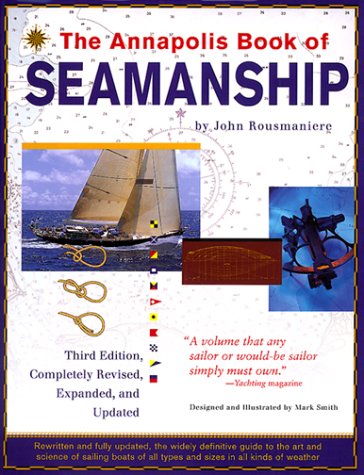
"Annapolis Book of Seamanship" by John Rousmaniere.  This is the book with the basics. If you have been in a keelboat class you've already read it, but it explains simply many of the basic concepts that would be good for any sailor to know.  They are available in the WYC office.


"Sailing Alone Around the World" by Captain Joshua Slocum.  "Full of astonishing adventures, this is the true story of the first man ever to circle the globe alone entirely by sea."  He did this in three years in 1895.

"The Proving Ground" by Bruce Knecht.  This is about the Hobart race and the disaster turned into a massive rescue mission as an entire regatta is caught in a massive storm with 80+ mph winds.


"The Endurance: Shackleton's Legendary Antarctic Expedition" by Caroline Alexander.  They were on a mission to the Antarctic when they were trapped by an ice flow.  As time wore on, they had to hoof it across the wasteland, use liferafts in stormy seas, and live off penguin meat for months until their Captain, Ernest Shackleton, and some others patched together a mission to go get help.  All this, and "not a man lost."  Some say it is the greatest survival story ever.  My personal favorite.


*You'll notice I've started a side bar that is devoted to nautical books. Please email me your favorite sailing books (fiction and non-fiction) at telltale@washingtonyachtclub.org and I'll put them up!

Oracle Gets its Wing

On November 10th the wing mast on the BMW Oracle went up.

POSTED BY: ELLIS JOHNSON


Photo Courtesy of Sailing Anarchy

For more information check out the BMWO website.

Wednesday, November 11, 2009

Andrew’s guide to Hazardous Situations

A Ratings Examiner’s tips on how NOT to die, or at least minimize dying, while sailing small boats.

BY ANDREW CHEUNG

Small sailboats--especially performance-oriented ones--can be hazardous in unexpected ways. Therefore if you’re planning on sailing these boats, it’s important to learn more about these hazards and how to deal with them.

Below are some possible hazards you may encounter, and suggestions on how to prepare for and handle these precarious situations. I do not pretend to be an expert on any of these subjects, but I've experienced some of the scenarios and would like to share my knowledge.

ILL-FITTING FLOTATION DEVICE

Lifejackets, PFDs, whatever you call 'em--they only work when you wear 'em. And they only work well when they fit. If you're considering buying a PFD for personal use, ask the store if you can jump in the water to test its fit. There's nothing more unpleasant than the sensation of a PFD riding up too far, obscuring your face (imagine trying to breathe through a wet cloth), cutting into your armpits, and snagging on deck hardware while you're desperately trying to swim out from underneath a turtled boat.

A well-fitting flotation device should not ride up while you're in the water. It should also conform to your body--make sure the shoulder straps don't stick up off your shoulders, and make sure there are no fancy pockets or webbing on the back that could snag on boat hardware.

GETTING TRAPPED IN A TURTLE

Arguably more pleasant than being eaten by a giant turtle, getting trapped under a turtled boat is still rather unpleasant. Luckily I've only experienced this twice: once under an FJ, and once under an International 14.

The best thing to do is avoid getting trapped in the first place by either preventing the boat from turtling, or jumping clear (but no farther than you can reach) from the boat during a capsize.

Otherwise:

1. Don't panic--most cockpits form a decent air bubble.
2. If you are sailing with crew and are both trapped, go one at a time (unless of course, there is no air pocket).
3. Clear your body of any entanglements (trapeze wire, rigging, etc).
4. Take time to ensure that your escape path is free of potential entanglement hazards (this is where that well-fitting flotation device comes in handy).
5. If you have a knife, make sure you can reach it.
6. Consider exiting belly-up--this makes it easier for you to grab the rail and pull yourself away from the boat, like a horizontal pull-up.
7. Holler at your crew as soon as you are clear and safe.

GETTING TRAPPED UNDER A SAIL

1. Lean into the boat as you capsize to windward, but don't linger or it will turtle.
2. Try to launch yourself fore or aft so you'll be able to reach the edge of something to pull yourself out.
3. Consider carrying a knife to cut through the sail if necessary.

FOOT LOOPS AND YOU


Don't let this happen to you. Carry a knife.

TRAPEZE HAZARDS

Trapeze sailing is no doubt exciting. However, trapeze harnesses can become dangerous in certain conditions. With the exception of newer designs, most trapeze harnesses have a fixed hook with no quick release. In a capsize, this hook may entangle itself on running or standing rigging, preventing the sailor from reaching the surface. While statistically unlikely, fatalities due to entanglement do occur.

In one instance, an Austrian Tornado catamaran sailor drowned when his hook became entangled in the rigging during a capsize. In a separate instance, a German sailor drowned when his 49er skiff pitchpoled and his hook caught on the shrouds. Read more here.

Thankfully I've never personally experienced this situation, but here are some tips I've compiled from what I’ve read and heard.

1. Consider purchasing a spreader bar with a quick-release function. Unfortunately, the ISO standard for such a system was only recently established, and early reviews of these systems range from "works great!" to "accidentally released me tons of times".
2. Place your hand over the hook opening during the capsize to prevent anything from snagging on it.
3. Wear your harness over all of your gear. In an emergency you may be able to remove it, or at least loosen it enough to provide the needed slack to disengage your hook.
4. Consider carrying a knife to cut through your harness or running rigging. Someone also mentioned wire cutters for standing rigging, but I'm unsure how easy it would be to perform this while trapped underwater.

GETTING TRAPPED UNDER A TRAMPOLINE

I have only heard/read of this happening before, so I can only speculate, but:

1. Strongly consider carrying a knife, even if it has a blunt 'safety-tip'.
2. Strongly consider temporarily attaching a second knife to the underside of the trampoline or crossbeams using velcro straps or some other removable method.

KNIVES

Having researched this topic extensively, I could write pages upon pages about the right knife to get. Unfortunately the perfect knife, which would be cheap, reliably sharp, and easy to use doesn't appear to exist. Here are some things to look for, in no particular order:

1. Blunt 'safety-tips' so you don't stab yourself in the leg when trying to cut that mainsheet.
2. Assisted-opening devices for folding knives. These torsion springs allow you to open a knife with minimal effort.
3. An easily accessible way to attach the knife to yourself.
4. Inexpensive because you'll lose it at some point.
5. Minimal care required to stay sharp even if exposed to moisture and salt (almost no cheap knives meet this ideal).
6. A hook knife feature, allowing you to cut line with one hand and minimal line tension.
7. If shopping for a dedicated hook knife, be sure to buy a double-bladed one, as the single-bladed hook knives require much more force to cut successfully . More information here.
8. If you are a keelboat sailor, minimal magnetic interference.
9. Brightly colored handle.

OTHER SAFETY GEAR

Other gear to consider using:

1. Loud whistle. Cheap, small, effective.
2. Brightly colored clothing. Remember, it's hard to see more than just the tip of someone's head when they're in the water, so skip the fashionable navy blue spray top and get something hideously neon.
3. Flares or a strobe light. Note the expiration date and/or the date you put in the batteries (batteries drain over time even when the device is powered off).
4. VHF radio and waterproof bag. Even if the radio says it's waterproof, it ain't. Remember, we get a discount at Fisheries Supply.

Monday, November 9, 2009

Hobie 33 Crash Test

Warren Miller documents the crash testing of the Hobie 33 monohull sailboat.

POSTED BY JOHN COURTER